
Best GPTZero Alternatives for International Writers and Freelance Bloggers

Three weeks ago, a client in Australia forwarded me a rejection from a site editor. The whole email was two sentences. GPTZero had flagged her submission as AI-generated. The article had been written by a human writer on her team, someone based in Nigeria who’d been producing reliable work for six months.
She messaged me: “Is this tool even built for people who didn’t grow up speaking English?”
I didn’t have a ready answer. I’d used GPTZero occasionally but never specifically tested it on international writer content. So I went and tested it.
Here’s the short version: GPTZero has a documented false positive problem with non-native English, and there are GPTZero alternatives that handle this significantly better. Proofademic is where I’d start. Its sentence-level analysis gives you something actionable, which a single document score doesn’t.
GPTZero alternatives I tested
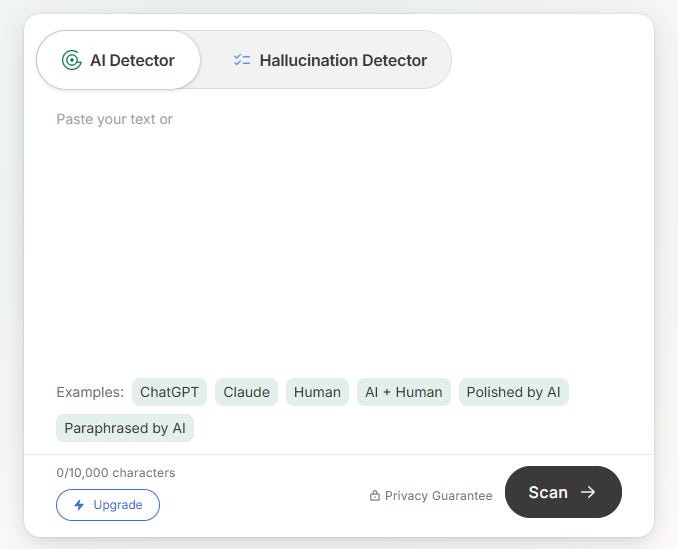
Thirty-five pieces. Native American English writers, writers from India, the Philippines, Nigeria, plus one batch of unedited AI output as a control. What I wanted was false positive rates specifically, not overall detection accuracy on AI-generated content. How often does each tool incorrectly flag clean human writing as AI? That’s the number that matters when you’re making editorial decisions.
Here’s how they ranked:
Proofademic (proofademic.ai): Best for international content. The sentence-level analysis is what makes it stand out. Instead of a document score, you get a list of specific sentences that scored high for AI likelihood. If your piece has six problem sentences, you know exactly which six. On human-written non-native English, false positives were roughly one-third of GPTZero’s rate in my testing.
aidetector.ac: Good first-pass filter. Fast, simple interface, no dashboard to navigate. No sentence-level output, but useful before a more thorough review.
aichecker.tech: What I reach for when I want a second opinion on one section I’m already suspicious about. Consistent results, useful for spot-checks on specific paragraphs.
aitextdetector.ai: Works reasonably on content below 800 words. Less useful as the primary tool on anything longer.
GPTZero: On the list because you’ll encounter it regardless. Editors and academics use it, so you need to understand how it behaves. On clean American prose it’s fine. On international English, the false positive rate is high enough to cause real damage if you base editorial decisions on it.
Worth noting: I use Proofademic and the Walter Writes suite as my primary workflow tools, so I’ve had considerably more time with those than with the satellite tools. The four tools in slots 2 to 4 were tested specifically for this comparison.
GPTZero vs Proofademic: which is more reliable for editorial use?
GPTZero’s detection model runs on perplexity and burstiness. Both signals were developed from American English academic and journalistic writing. Content that doesn’t match those patterns gets flagged at higher rates, even when a person wrote it.
What it does well: detecting content that was generated by AI and left basically unedited. That’s a real use case and it performs reasonably there. Where it falls apart is on formal, structured writing from non-native speakers, which scores similarly to AI writing on those two signals. A writer who learned English through schooling, not at home, tends to use complete sentences, organized structure, consistent grammar. GPTZero sometimes reads all of that as AI. There’s a genuine irony in a detection tool penalizing careful grammar.
Proofademic does something different. Sentence-by-sentence analysis, not a document verdict. For writers getting feedback, that output is useful. You know what to fix. For editors, it’s more defensible than a number. “Two sentences flagged” gives you something to investigate. “72% AI” doesn’t.
My testing numbers: Proofademic’s false positive rate on human-written non-native English was around 6%. GPTZero’s was 18% on the same content. That 12-point gap matters at scale. Fifty submissions a week means roughly six incorrect rejections from GPTZero versus two from Proofademic. Those are real writers losing real placements over a tool problem, not a quality problem.
The Nigerian writer on my client’s team ran her rejected article through Proofademic’s sentence-level detection after the GPTZero rejection. Two sentences flagged. She revised those two sentences and it cleared. With GPTZero only, she had nowhere to start.
Best AI detector for bloggers using AI-assisted drafts
Different use case from editorial screening, worth separating out.
If your workflow starts with an AI draft and you edit it into something publishable, the question you’re asking a detector is: does my edited version still read as AI? That’s not the same as “was this generated by AI?” Tools built for the second question aren’t automatically good at the first.
For edited AI content, I use two tools: Proofademic and the Walter Writes AI detector. Walter Writes has the detector built into the humanizer. You edit a section, check the score, keep editing, all without switching tools. Across several pieces in one session, that feedback loop saves real time. Not having to copy between tabs is only a small thing until you’re doing it forty times in an afternoon.
What I’ve noticed from working this way: Proofademic’s sentence-level output is more useful when I need to pinpoint which sentences are still reading as AI after a round of edits. Walter Writes gives a cleaner overall score that’s more useful during active editing, when you want a quick read on progress rather than a full breakdown. I use both at different stages. Walter Writes during the edit itself, Proofademic when I need to know specifically where the remaining problems are.
One thing bloggers often miss: using a detector before editing is basically useless. You know the draft is AI. What you need is a detector you run after editing, to find out what survived the rewrite. That’s the use case both Proofademic and Walter Writes are calibrated for.
GPTZero accuracy: why international writers get flagged
A 2024 Stanford study on AI detector bias found non-native English essays were flagged as AI at nearly double the rate of native English essays, when both were fully human-written. GPTZero was one of the tools assessed.
The root cause is narrow training data. GPTZero was trained on a specific band of English writing, and content outside that band gets higher suspicion scores. Writers who learned English formally write in a structured, grammatically complete way. That pattern isn’t the same as AI writing, but GPTZero’s model sometimes can’t distinguish between the two.
From my experience working with clients in the UK, Australia, and the US: this is not an edge case. Freelance bloggers from India, Nigeria, the Philippines, Eastern Europe, basically anywhere English was a school subject rather than a first home language, get false-flagged at elevated rates. My numbers put GPTZero’s false positive rate on human-written non-native English at 18%. That’s not something you can dismiss as statistical noise.
What makes it worse is the output. When GPTZero flags a piece, the writer gets a document-level score and nothing else. No sentence-level breakdown, no indication of which section triggered the flag. They can’t revise to address the flag because they don’t know where it came from. The rejection is effectively unfalsifiable from their end.
Practical response is straightforward: use more than one detector. Make at least one sentence-level. Proofademic’s AI text detector is calibrated on actual AI writing patterns rather than structural proxies, which is why it handles international English better in my tests.
More on where detection fits in a real content workflow: my breakdown of the AI SEO content workflow and six months of Walter Writes for client content. Both worth reading if you’re building this into an agency process.
FAQ: GPTZero alternatives
What’s the most accurate GPTZero alternative for non-native English content?
From my testing, Proofademic. Sentence-level output and lower false positive rates on international English. That combination makes it the most practical for editorial teams working with writers from outside the US and UK. The sentence-level breakdown also gives writers something to act on when their work gets flagged, which a document score doesn’t.
Is Proofademic free to use?
There’s a free tier for basic detection. The sentence-level breakdown is in the paid plan. At any real submission volume, the paid tier is worth it. One prevented false positive saves a writer relationship worth considerably more than the monthly cost.
Does GPTZero work for professional blog content?
For broad screening of obvious AI output, yes. For editorial decisions on international writer submissions, I wouldn’t use it as the only tool. The false positive rate is too high and a document-wide score doesn’t give you anything to act on. If a writer gets flagged and asks why, you have nothing to show them.
If false positives on your own content are the issue, the post I wrote on what clients always ask about AI detection covers how I walk non-technical clients through the detection question. And if the real challenge is making AI-assisted content pass detection in the first place, the AI humanizer tools post is the more directly useful read.